
 EN
EN


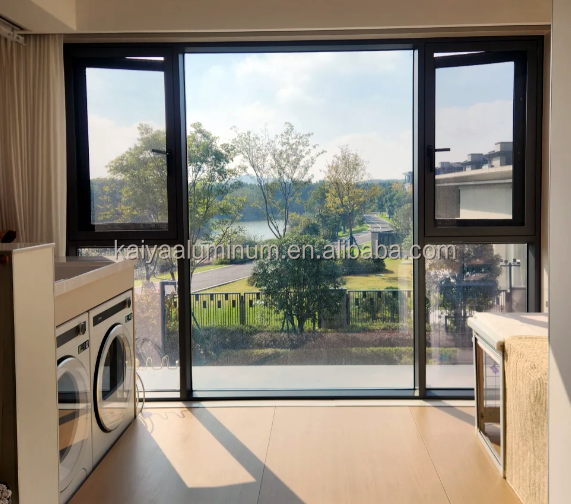
Modern architecture demands solutions that balance visual appeal with structural integrity, and aluminum and glass railing systems have emerged as the definitive answer to this challenge. These systems represent a sophisticated fusion of materials engineered to deliver both aesthetic excellence and long-term performance. As building codes evolve and design preferences shift toward transparency and minimalism, aluminum and glass railing systems continue to gain prominence across residential, commercial, and institutional projects. Understanding how these systems achieve their dual mandate of design and durability requires examining the material science, engineering principles, and practical considerations that make them viable for diverse applications.
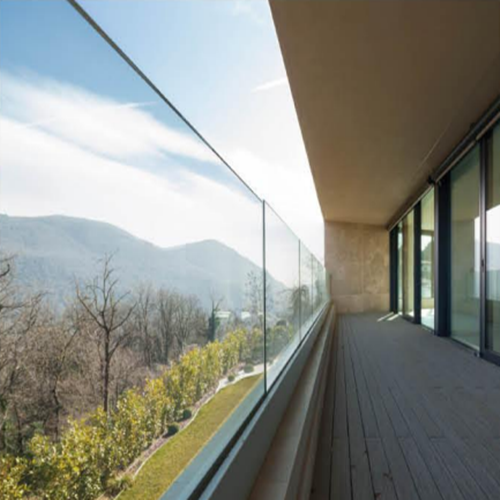
The marriage of aluminum and glass in railing systems is not merely aesthetic but fundamentally functional. Aluminum provides the structural framework necessary to support safety loads while resisting environmental degradation, and glass delivers unobstructed sightlines that enhance spatial perception and natural light transmission. Together, aluminum and glass railing systems create installations that feel open and expansive while meeting rigorous safety standards. This combination has become particularly relevant in contemporary construction where occupants expect both protection and visual connectivity to their surroundings. The performance of aluminum and glass railing systems depends on careful attention to material selection, connection design, and installation precision.
Material Properties That Define Performance
Aluminum Alloy Selection and Structural Capacity
The aluminum components in aluminum and glass railing systems are typically fabricated from 6000-series alloys, which offer an optimal balance of strength, corrosion resistance, and extrudability. These alloys achieve their mechanical properties through heat treatment processes that create a fine-grain microstructure capable of withstanding imposed loads. The yield strength of these alloys ranges from 160 to 240 MPa depending on temper designation, providing adequate capacity for railing applications without excessive material thickness. Aluminum and glass railing systems benefit from aluminum's favorable strength-to-weight ratio, which simplifies installation and reduces structural demands on supporting elements. The natural oxide layer that forms on aluminum surfaces provides inherent corrosion protection, making aluminum and glass railing systems suitable for coastal and industrial environments where atmospheric exposure accelerates degradation in other materials.
Glass Specification and Safety Compliance
Glass panels in aluminum and glass railing systems must be specified as tempered or laminated safety glass to meet building code requirements for guardrail infill. Tempered glass undergoes a thermal treatment process that introduces compressive surface stresses, increasing its strength approximately four times compared to annealed glass and ensuring that fracture produces small granular fragments rather than dangerous shards. Laminated glass consists of two or more glass plies bonded with interlayer materials such as polyvinyl butyral, which retains fragments upon breakage and provides post-fracture load capacity. The thickness of glass in aluminum and glass railing systems typically ranges from 10mm to 12mm for tempered monolithic panels and 6mm+6mm for laminated configurations, with selection driven by span dimensions and anticipated loads. Aluminum and glass railing systems that incorporate laminated glass offer enhanced acoustic performance and security characteristics in addition to safety compliance.
Engineering Design Principles
Load Distribution and Connection Design
The structural performance of aluminum and glass railing systems depends fundamentally on how loads transfer from glass panels through aluminum framing to structural supports. Building codes specify minimum horizontal loads that aluminum and glass railing systems must resist, typically 50 pounds per linear foot applied at the top rail or 200 pounds concentrated load applied over one square foot. These loads simulate human impact scenarios and must be resisted without excessive deflection or permanent deformation. The connection between glass and aluminum in aluminum and glass railing systems is achieved through mechanical clamping systems, structural glazing channels, or point-supported fittings, each with distinct performance characteristics and visual expressions. Properly designed aluminum and glass railing systems distribute applied loads through multiple connection points to prevent stress concentrations that could initiate failure.
Deflection Control and Serviceability
Beyond ultimate strength requirements, aluminum and glass railing systems must satisfy serviceability criteria related to deflection under normal use. Excessive deflection can create user discomfort, compromise glass edge support, and accelerate wear at connection points. Industry standards typically limit top rail deflection in aluminum and glass railing systems to L/120 or L/60 depending on application and visibility of deformation, where L represents the span length. Achieving these deflection limits requires careful proportioning of aluminum extrusion sections and consideration of glass panel stiffness contributions. In aluminum and glass railing systems with continuous top rails, the rail acts as a beam spanning between posts, and its section modulus must be adequate to control bending deformations. The integration of glass panels can provide additional stiffness to aluminum and glass railing systems when connections effectively transfer in-plane shear forces.
Thermal Movement and Joint Design
Aluminum and glass exhibit different coefficients of thermal expansion, creating dimensional changes that must be accommodated within aluminum and glass railing systems. Aluminum expands approximately 23 microns per meter per degree Celsius, while glass expands about 9 microns per meter per degree Celsius. This differential movement requires that connections in aluminum and glass railing systems allow for relative displacement while maintaining structural engagement and weather sealing. Improperly detailed aluminum and glass railing systems can experience binding, stress concentrations, or sealant failure due to thermally induced movements. Expansion joints are incorporated into extended runs of aluminum and glass railing systems to prevent accumulation of thermal stresses, with joint locations selected to maintain visual continuity while accommodating calculated movements. The thermal mass of glass panels can moderate temperature fluctuations in aluminum framing, reducing peak expansion magnitudes in aluminum and glass railing systems compared to all-metal alternatives.
Durability Factors and Long-Term Performance
Corrosion Resistance and Surface Protection
The durability of aluminum and glass railing systems in aggressive environments depends on the protective measures applied to aluminum components. While aluminum forms a natural oxide layer, this passive film can be compromised by chlorides, acidic conditions, or galvanic coupling with dissimilar metals. Anodizing creates a thicker, more uniform oxide layer on aluminum surfaces, enhancing corrosion resistance and providing a substrate for coloration in aluminum and glass railing systems. Powder coating applies organic polymer films that provide barrier protection and extensive color options for aluminum and glass railing systems, though coating integrity must be maintained to prevent localized corrosion initiation. Marine and industrial applications of aluminum and glass railing systems benefit from alloy selection that minimizes susceptibility to pitting and crevice corrosion, with 5000-series alloys sometimes substituted for standard 6000-series in extreme exposures.
Glass Weathering and Edge Protection
While glass is inherently corrosion-resistant, long-term durability of aluminum and glass railing systems requires attention to edge quality and protection. Glass edges are vulnerable to impact damage and stress concentration, making edge treatment critical in aluminum and glass railing systems. Polished edges provide the highest strength and appearance quality, while seamed edges offer adequate performance at lower cost for aluminum and glass railing systems where edges are concealed within framing channels. Surface weathering of glass in aluminum and glass railing systems is primarily aesthetic rather than structural, with mineral deposits and atmospheric contaminants creating staining that requires periodic cleaning. The interface between glass and aluminum in aluminum and glass railing systems must include drainage provisions to prevent standing water that accelerates staining and promotes biological growth.
Connection Hardware Longevity
The fasteners, gaskets, and setting blocks that integrate aluminum and glass railing systems are critical to long-term performance but often receive insufficient attention during specification. Stainless steel fasteners prevent galvanic corrosion when in contact with aluminum while providing adequate strength and corrosion resistance for aluminum and glass railing systems. Elastomeric gaskets and setting blocks must be formulated to resist ultraviolet degradation, ozone attack, and compression set over the service life of aluminum and glass railing systems. Silicone and EPDM formulations offer superior weathering resistance compared to natural rubber or neoprene in aluminum and glass railing systems. The replacement interval for consumable components in aluminum and glass railing systems should be established during design and communicated to building owners to ensure performance is maintained through routine maintenance rather than deferred until failures occur.
FAQ
What makes aluminum and glass railing systems suitable for coastal environments?
Aluminum and glass railing systems perform well in coastal environments due to aluminum's natural corrosion resistance and glass's immunity to salt-induced degradation. The passive oxide layer on aluminum protects against chloride attack, particularly when enhanced through anodizing or powder coating. Aluminum and glass railing systems should specify marine-grade aluminum alloys and stainless steel fasteners in direct coastal exposure. Glass panels are unaffected by salt spray and maintain clarity without the pitting or staining common in metal alternatives. Proper drainage detailing in aluminum and glass railing systems prevents salt accumulation at connection points where localized corrosion could initiate. Regular freshwater rinsing extends the service life of aluminum and glass railing systems in coastal applications by removing salt deposits before they concentrate and compromise protective films.
How do aluminum and glass railing systems meet building code safety requirements?
Aluminum and glass railing systems meet building code safety requirements through engineered design that addresses load capacity, guardrail height, and infill opening dimensions. The structural aluminum framing in aluminum and glass railing systems is proportioned to resist specified horizontal loads of 50 pounds per linear foot or 200 pounds concentrated load without failure or excessive deflection. Glass panels in aluminum and glass railing systems must be tempered or laminated safety glass with minimum thickness determined by span and support conditions to prevent breakage under normal use and retain fragments if fracture occurs. Guardrail height in aluminum and glass railing systems must meet minimum dimensions typically 42 inches for commercial applications and 36 inches for residential, measured from the walking surface to the top of the rail. The spacing and configuration of aluminum and glass railing systems must prevent passage of a 4-inch diameter sphere through any opening to protect young children.
What maintenance do aluminum and glass railing systems require?
Aluminum and glass railing systems require periodic cleaning and inspection to maintain appearance and identify potential issues before they compromise performance. Glass panels in aluminum and glass railing systems should be cleaned using non-abrasive methods and pH-neutral cleaners to remove mineral deposits, atmospheric contaminants, and biological growth without damaging protective coatings on aluminum framing. Inspection of aluminum and glass railing systems should verify that connection hardware remains tight, drainage paths are clear, and sealants maintain adhesion and flexibility. Anodized finishes on aluminum and glass railing systems are highly durable but can be refreshed through specialized cleaning processes if weathering or staining occurs. Powder-coated aluminum in aluminum and glass railing systems should be examined for coating damage that exposes base metal, with touch-up performed promptly to prevent corrosion propagation. The frequency of maintenance for aluminum and glass railing systems depends on environmental exposure, with coastal and industrial locations requiring more frequent attention than protected inland installations.