
 EN
EN



Modern business facilities demand building solutions that balance aesthetics, performance, and financial return. Commercial curtain walls have emerged as a strategic choice for organizations seeking to enhance their physical assets while addressing operational requirements. Understanding how commercial curtain walls align with specific business objectives helps decision-makers evaluate whether this building system matches their facility needs, budget constraints, and long-term property goals.
The decision to implement commercial curtain walls extends beyond architectural preference. Business leaders must consider how these systems impact energy costs, maintenance schedules, brand perception, and space utilization. Commercial curtain walls offer distinct advantages in thermal performance, natural light management, and design versatility that directly influence operational efficiency and occupant satisfaction. This article examines how commercial curtain walls address key business considerations across facility types, helping you determine whether this building envelope solution aligns with your organizational priorities.
Business Performance Drivers of Commercial Curtain Walls
Energy Efficiency and Operating Cost Reduction
Commercial curtain walls directly impact your facility's energy profile through advanced thermal insulation and solar control capabilities. The non-structural nature of commercial curtain walls allows for continuous insulation layers without thermal bridging, reducing heat transfer between interior and exterior environments. High-performance glazing options within commercial curtain walls can achieve U-values below 0.30, significantly lowering heating and cooling loads compared to traditional wall assemblies. For businesses operating in climate zones with extreme temperatures, commercial curtain walls with low-emissivity coatings and inert gas fills deliver measurable reductions in HVAC energy consumption, translating to lower utility expenses across the building's operational lifespan.
The financial advantage of commercial curtain walls becomes evident when calculating lifecycle costs rather than initial construction expenses alone. While commercial curtain walls typically require higher upfront investment than conventional exterior walls, the energy savings accumulate year after year. Businesses with sustainability reporting requirements find that commercial curtain walls contribute measurably to carbon reduction targets, supporting corporate environmental commitments while reducing operational overhead. The predictable thermal performance of commercial curtain walls also stabilizes energy budgets, eliminating the cost volatility associated with poorly insulated building envelopes.
Brand Expression Through Architectural Presence
Commercial curtain walls serve as visible brand assets that communicate organizational values to clients, partners, and talent. The design flexibility inherent in commercial curtain walls enables businesses to create distinctive facades that reinforce brand identity through material selection, color schemes, and geometric patterns. Companies in competitive markets leverage commercial curtain walls to establish architectural differentiation, making their facilities instantly recognizable within urban skylines or business parks. This visual prominence matters particularly for client-facing businesses where facility appearance influences perception of professionalism and market position.
The transparency achievable with commercial curtain walls aligns with contemporary corporate values emphasizing openness and connectivity. Glass-dominated commercial curtain walls create visual engagement between interior spaces and surrounding environments, projecting an image of accessibility while maintaining security and climate control. Businesses undergoing rebranding or market repositioning often select commercial curtain walls during renovation projects to signal transformation and forward-thinking management. The architectural statement created by commercial curtain walls extends beyond aesthetics, functioning as a tangible expression of organizational culture and strategic direction.
Operational Advantages for Diverse Business Models
Workplace Quality and Productivity Enhancement
Commercial curtain walls fundamentally alter the interior environment by maximizing natural daylight penetration while controlling glare and solar heat gain. Research consistently links daylight exposure to improved employee alertness, mood regulation, and task performance. Businesses implementing commercial curtain walls report enhanced workplace satisfaction as occupants benefit from views to exterior environments and reduced reliance on artificial lighting during daylight hours. The psychological impact of commercial curtain walls extends to talent recruitment and retention, as modern professionals increasingly prioritize workplace quality when evaluating employment opportunities.
The acoustic performance of properly designed commercial curtain walls addresses another critical workplace consideration. Multi-pane glazing assemblies within commercial curtain walls provide superior sound attenuation compared to single-glazed systems, protecting interior spaces from exterior noise pollution. For businesses located near transportation corridors or in dense urban settings, commercial curtain walls create quieter work environments that support concentration and communication. The combination of thermal comfort, visual access, and acoustic control delivered by commercial curtain walls directly influences employee productivity metrics that impact business performance.
Flexibility for Future Business Evolution
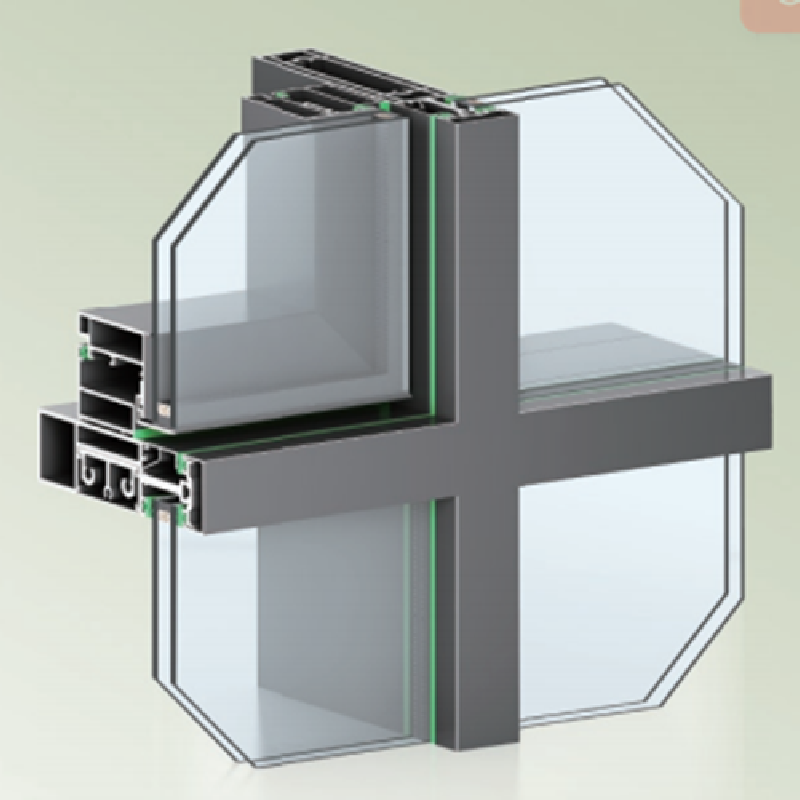
Commercial curtain walls support organizational adaptability by separating exterior enclosure from interior spatial organization. Since commercial curtain walls carry no structural load beyond their own weight, businesses can reconfigure interior layouts without exterior wall constraints. This flexibility proves valuable for growing companies that anticipate departmental reorganization, technology infrastructure changes, or shifts in space utilization patterns. Commercial curtain walls enable businesses to modify floor plans as operational needs evolve without triggering complex exterior renovations or compromising building envelope integrity.
The modular nature of commercial curtain walls also facilitates phased construction and future expansion. Businesses can design commercial curtain walls with connection points that accommodate vertical or horizontal additions as organizational growth demands increased square footage. This scalability consideration matters particularly for companies operating in competitive markets where facility capacity must align with business trajectory. Commercial curtain walls provide a building envelope solution that grows with your business rather than becoming an obstacle to expansion.
Risk Management and Long-Term Value Protection
Maintenance Requirements and Service Life
Commercial curtain walls offer predictable maintenance profiles that support long-term facility management planning. The factory-fabricated components of commercial curtain walls undergo quality control processes that ensure consistent performance across the entire facade. Weather seals, gaskets, and glazing units within commercial curtain walls have established replacement cycles, allowing businesses to schedule maintenance activities without emergency interventions. Aluminum framing systems used in most commercial curtain walls resist corrosion and dimensional instability, maintaining structural integrity and weather resistance for decades with routine inspection and minor repairs.
The serviceability of commercial curtain walls influences total cost of ownership calculations. Individual glazing units within commercial curtain walls can typically be replaced without removing adjacent panels, minimizing disruption and repair costs when damage occurs. Businesses operating in regions with severe weather exposure value the resilience of commercial curtain walls against wind loading, precipitation, and temperature cycling. The engineered performance of commercial curtain walls reduces the likelihood of water infiltration, air leakage, and thermal deficiency issues that plague poorly constructed building envelopes, protecting interior assets and avoiding costly remediation work.
Building Value and Investment Return
Commercial curtain walls enhance property valuations through both functional performance and market perception. Real estate appraisers recognize that commercial curtain walls typically indicate higher construction quality and more sophisticated building systems compared to conventional facades. Buildings featuring commercial curtain walls command premium lease rates in competitive markets, as tenants associate this building technology with modern, well-maintained facilities. For businesses that own their facilities, commercial curtain walls contribute to asset appreciation that strengthens balance sheets and provides financial flexibility for future capital needs.
The investment case for commercial curtain walls strengthens when considering regulatory trends toward stricter energy codes and environmental standards. Buildings with high-performance commercial curtain walls already meet or exceed many emerging efficiency requirements, avoiding costly retrofits to achieve compliance. Forward-thinking businesses view commercial curtain walls as regulatory insurance that protects property value against obsolescence. The combination of operational savings, occupant benefits, and asset protection makes commercial curtain walls a strategic capital allocation for organizations managing their facility portfolios as long-term investments rather than static costs.
FAQ
What building types benefit most from commercial curtain walls?
Commercial curtain walls deliver the greatest value for mid-rise and high-rise office buildings, corporate headquarters, institutional facilities, and mixed-use developments where facade area represents a significant portion of total building envelope. Businesses operating facilities with high internal heat loads from equipment or occupancy benefit from the solar control and thermal insulation that commercial curtain walls provide. Retail and hospitality properties also utilize commercial curtain walls to create visual connectivity with surrounding environments while maintaining climate control. The return on investment for commercial curtain walls increases with building height, facade complexity, and operational hour intensity.
How do commercial curtain walls perform in different climate zones?
Commercial curtain walls adapt to diverse climate conditions through specification adjustments in glazing type, frame thermal breaks, and air seal design. In heating-dominated climates, commercial curtain walls incorporate low-emissivity coatings on interior glass surfaces to retain interior heat while admitting solar gain. Cooling-dominated regions require commercial curtain walls with exterior low-emissivity coatings and higher shading coefficients to reject solar heat. Mixed climates demand commercial curtain walls with balanced solar heat gain coefficients that optimize performance across seasonal variations. Properly engineered commercial curtain walls outperform conventional walls across all climate zones when specified with appropriate performance characteristics for local conditions.
What factors determine whether commercial curtain walls suit a specific business facility?
Several evaluation criteria help determine commercial curtain walls suitability for your business. Consider whether your organization values architectural expression as a brand asset and whether daylight-rich workspaces align with your occupant wellness priorities. Assess whether energy cost reduction and environmental performance support your operational goals and sustainability commitments. Evaluate your facility's intended service life and whether the durability of commercial curtain walls justifies the initial investment. Consider future flexibility needs and whether commercial curtain walls enable the spatial adaptability your business may require. Finally, examine local construction costs and contractor availability to ensure commercial curtain walls can be delivered within your project budget and schedule constraints. The decision depends on balancing these factors against your specific business objectives and facility requirements.